Zoe Fischer · 2 September 2026
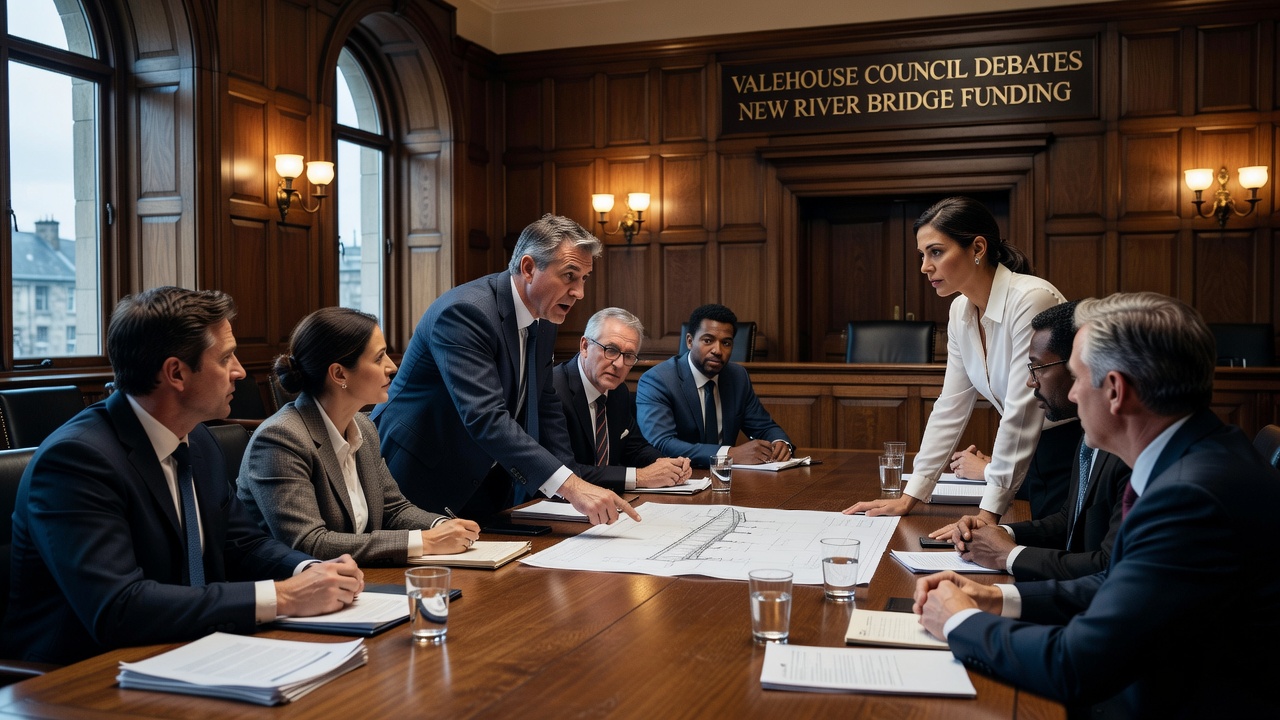
The Valehouse Council convened on Tuesday to discuss funding options for a proposed bridge spanning the River Vale, a project aimed at improving connectivity between the historic town centre and outlying residential areas. Councillors reviewed a preliminary cost estimate of £4.2 million, with potential contributions from central government grants and local developer levies under consideration. The debate highlighted longstanding infrastructure challenges while balancing preservation of the area's heritage character.
Project Scope and Financial Considerations
Officials presented engineering assessments indicating the new crossing would alleviate congestion on the existing 19th-century stone bridge, which currently handles over 12,000 vehicles daily. Funding models discussed included a 60% contribution from the Department for Transport and the remainder split between council reserves and section 106 agreements with nearby housing developments. Heritage officers stressed the need for sympathetic design to complement Valehouse's listed buildings and conservation zones, ruling out certain modern materials during early consultations.
Opposition members questioned the urgency of the expenditure amid competing priorities such as school upgrades and flood defences. A motion to commission a full environmental impact study passed with cross-party support, delaying final approval until the next fiscal quarter. Projected timelines suggest construction could begin in 2026 if funding is secured.
Public Input and Heritage Implications
Local residents and heritage groups submitted over 200 written responses, with many expressing concerns about increased traffic near protected wetlands and archaeological sites. Proponents argued the bridge would boost tourism access to Valehouse's industrial heritage trail without compromising visual amenity. Council leader Margaret Ellison emphasised ongoing collaboration with English Heritage to ensure compliance with national guidelines.
Further public consultations are scheduled for next month, allowing residents to review revised designs and traffic modelling data. The council also agreed to explore alternative low-impact options, including pedestrian and cycle prioritisation, to minimise environmental disruption while addressing essential transport needs.